Foteini Zaglara is a photographer from Athens, born in 1995, who focuses primarily on self-portraiture. Her involvement with photography began when her parents bought her a camera after she was admitted to the School of Early Childhood Education in Ioannina.
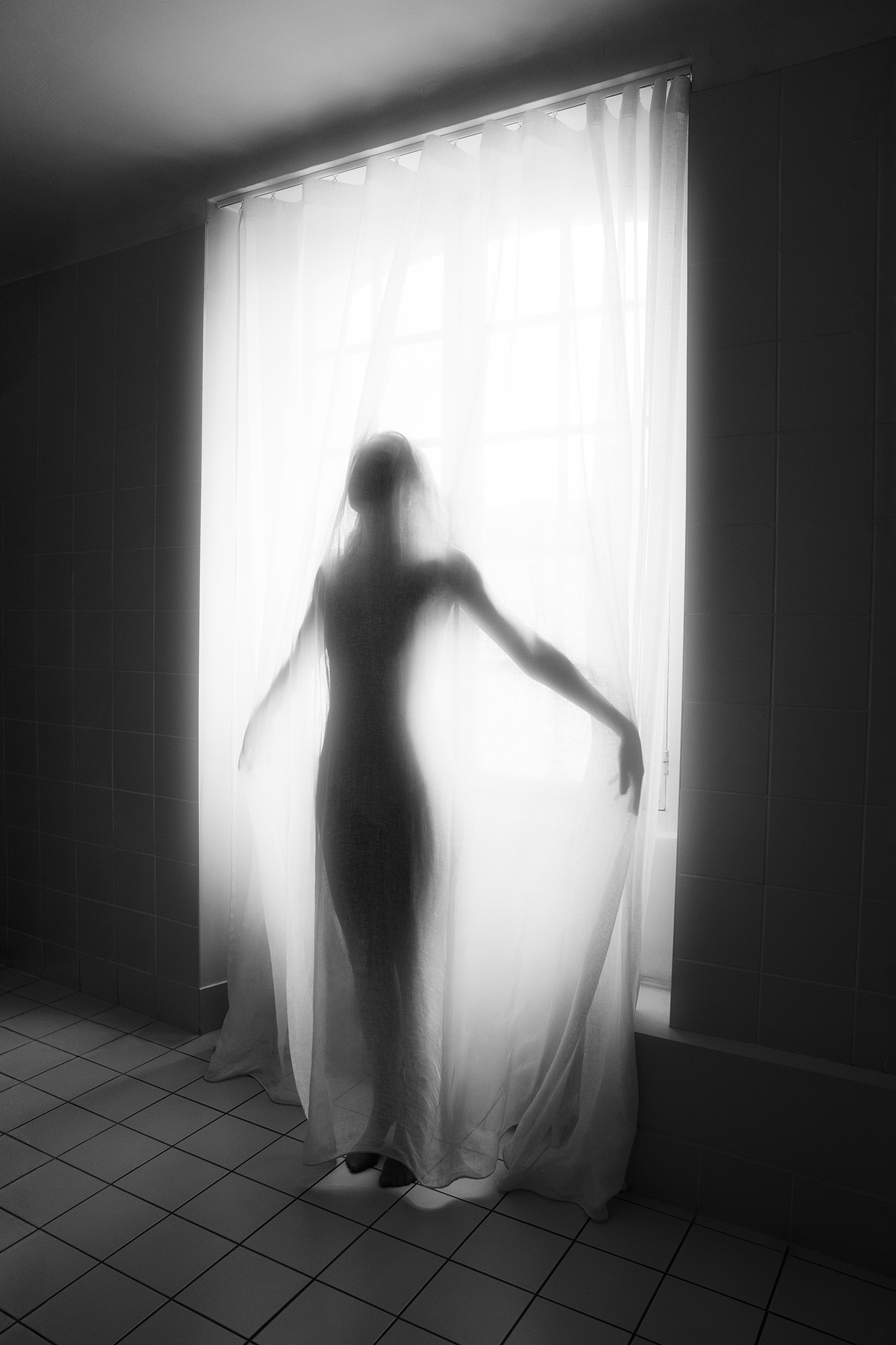
The images she creates seem to emerge from the world of imagination, dreams, or even fairy tales, yet through her self-portraits, she often manages to address social issues.
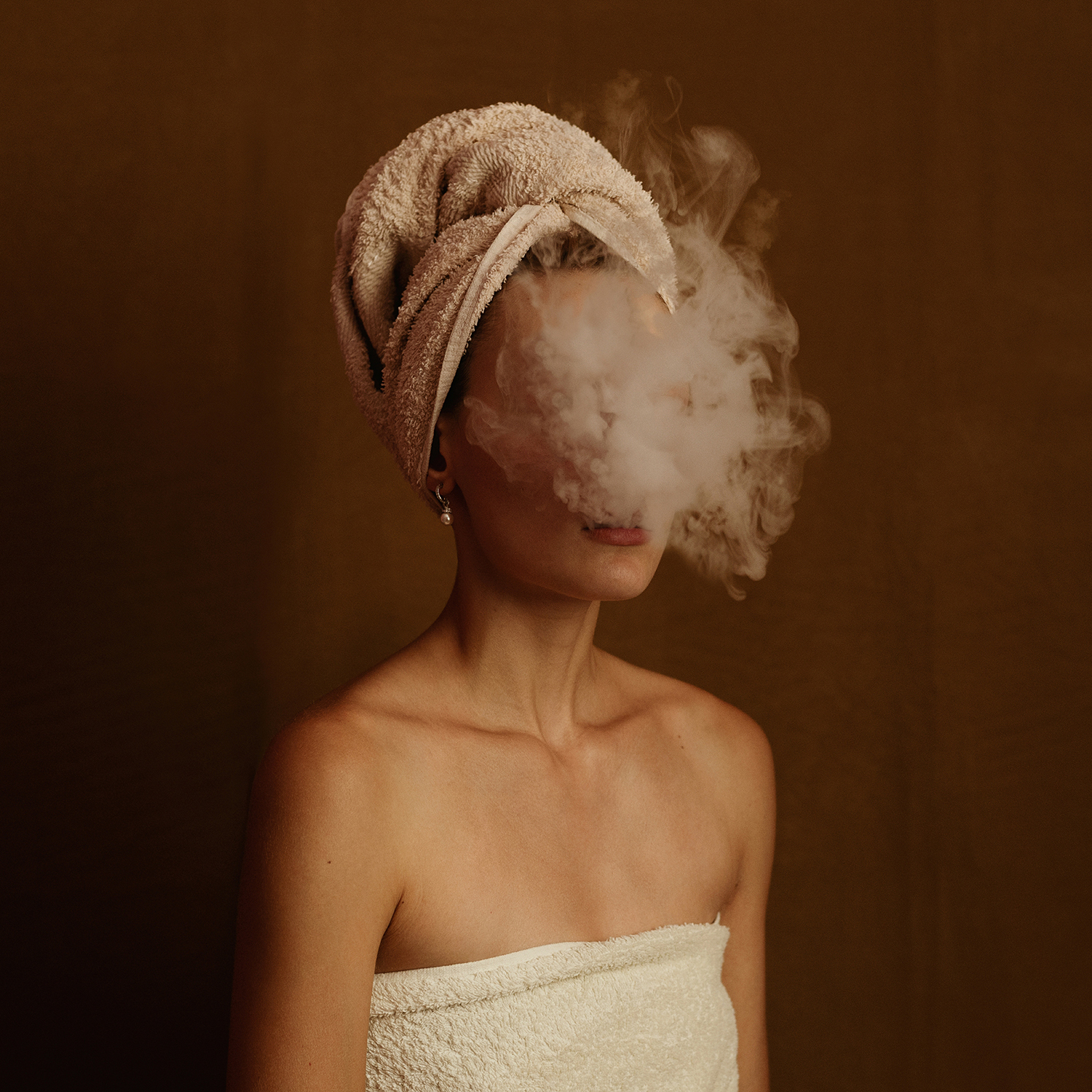
She has exhibited in many countries across Europe and America and has received numerous awards—the most significant perhaps being the Sony National Award in 2022 for her self-portrait "Rolling Boil," which also brought her widespread recognition.
How does she achieve all of this? Read the answers she gave to our questions and view her photographs on her website: http://foteinizaglara.com
1) Did winning the National Award at the 2022 Sony World Photography Awards influence the choice of themes in your subsequent photographs?
No, it didn't influence me at all. On the contrary, I believe that if I chose to continue with concepts similar to Rolling Boil, I would remain creatively stagnant.
For me, photography is a constant search and evolution. The themes that concern me either relate to social issues or escape realism entirely, moving toward a more fantastical, transcendental world. I am not interested in repeating a successful formula, but rather in the need to explore new ideas and narratives.
2) Can you share some technical details regarding your award-winning portrait?
For that shot, I used a tripod to stabilize the camera. At the time, I was shooting with a Nikon D610 and a 50mm lens, with an aperture of f/3.2, shutter speed 1/80, and ISO 640.
To be able to see my frame and body positioning, I had connected the camera to my phone. The smoke seen in the image is not a stock photo; it came from an electronic cigarette so that the result would be as realistic as possible.
3) In your work, does the self-portrait function as a means of self-expression or as a narrative of an internal reality? Where does the photographic image end and your personal narrative begin?
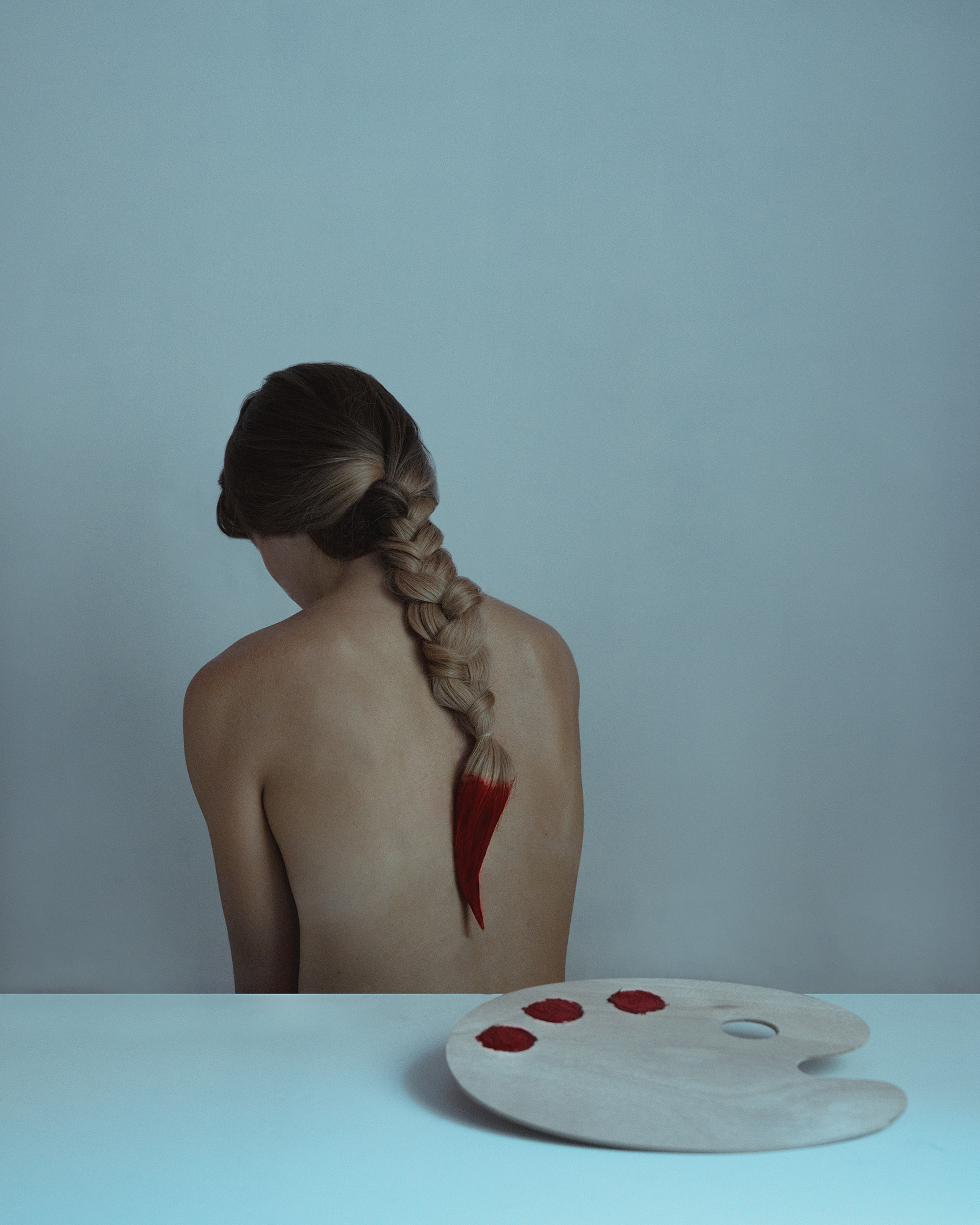
The self-portrait functions primarily as a storytelling tool. I want to tell stories, and that is why each photograph embodies a different persona. Nevertheless, it is inevitable that—because I am both the creator and the subject—elements of my personality permeate the work. The photographic image and the personal narrative coexist and complement each other, with no clear boundaries between them.
4) Is being the model in your own photographs an advantage, or do you feel it can be limiting at times?
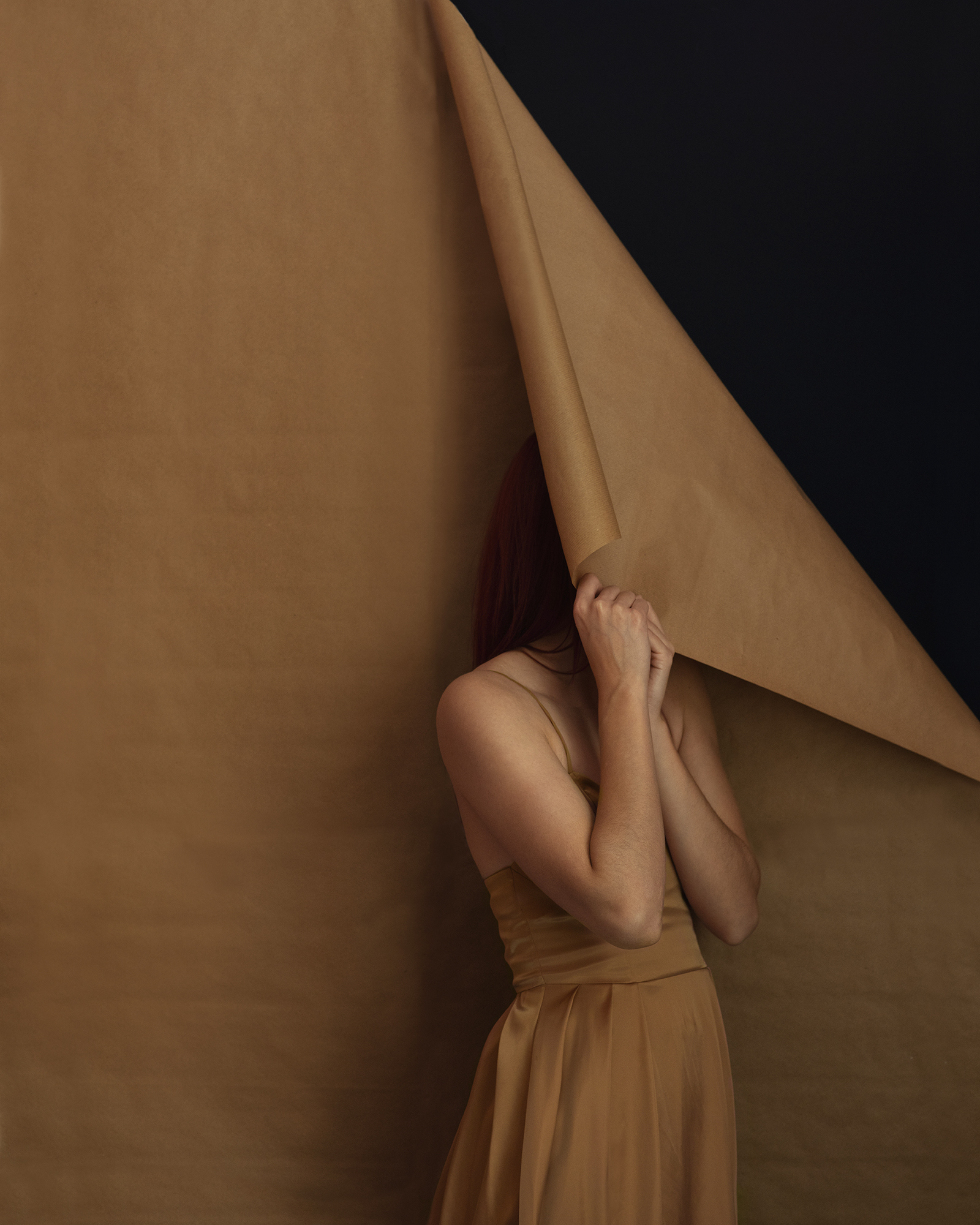
There are moments when it makes things much easier. For example, it is easier to implement a "crazy" idea, like diving into the Voidomatis River in the middle of winter, without having to ask the same of a model. On the other hand, there are practical difficulties: I might be at a location with limited time as the sun is setting, and by the time I am ready, I might lose some good frames.
5) Are there moments when your photography works therapeutically for you? If so, how?
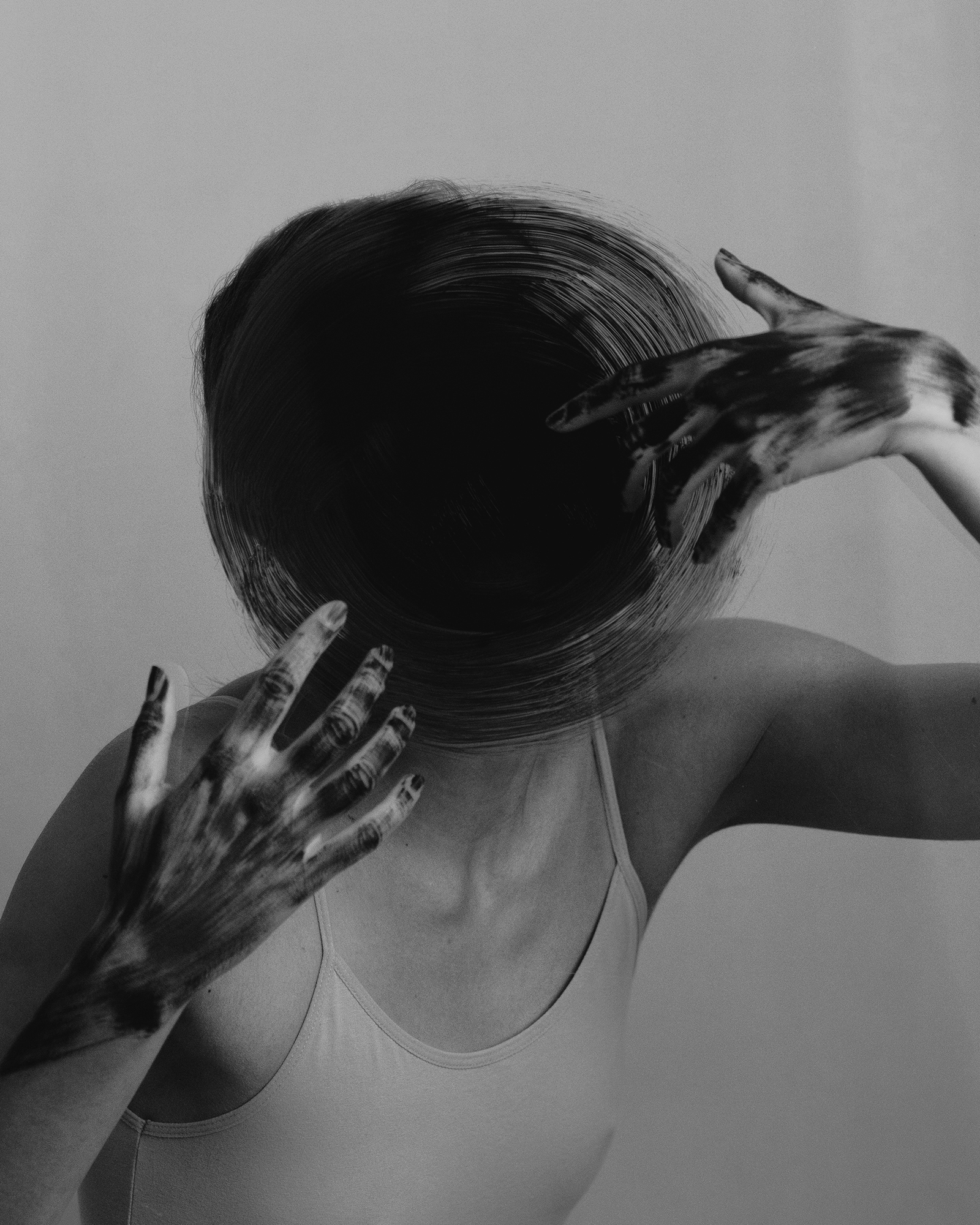
Yes, there are. Although I stage most of my photographs, there are works that were born out of a deep internal need. A characteristic example is The Anatomy of Grief, which was created as a way to manage grief and attempt to understand it.
6) We heard you on the "Fotinos Thalamos"(*) podcast talking about your experience and studies in Ioannina. Does the province offer opportunities, or at least inspiration, to young people?
I cannot say with certainty whether the province offers opportunities because I left Ioannina as soon as I finished my studies, and I don't know how things would have evolved if I had stayed. What I can say for sure is that I always had a close connection with nature, and it served as a sanctuary for me. There, I felt free to create, observe, and experiment, especially during my first steps in photography. When I returned to Athens, I missed that connection intensely; that is why I have integrated it back into my work over the last two to three years.
7) Which Greek and which international photographer moves you?
There are so many photographers I admire; there is truly incredible talent out there. But if I had to pick one Greek photographer, it would be Yiorgos Kaplanidis, mainly because of his aesthetic. Among international photographers, I distinguish Jack Davison for the way he approaches portraiture and photographic narrative.
(*) Fotinos Thalamos :Camera Lucida or, literally, Light Chamber/Light Room.
Two
Our monthly theme for friends of our Facebook group.
Grab your camera or phone, explore this month's theme and share your own shot with the group.
Newsletter
Contact
-
Address:
Building No. 9, Eastern Center, Kalamata
(opposite ERT Kalamata) -
Phone:
+30 6974 655 551 -
Email:
photokalamatas@gmail.com - Website: www.fokal.gr
Social Media
-
Facebook Page:
Kalamata Photography Association – F.O.KAL. -
Facebook Group:
Friends of the Kalamata Photography Association – F.O.KAL. -
Instagram:
@fokal_kalamatas