Andreas Manonakakis "Light, Memory, and Image: The Artistic World of A. Manolakakis"
"Light, Memory, and Image: The Artistic World of Manolakakis"
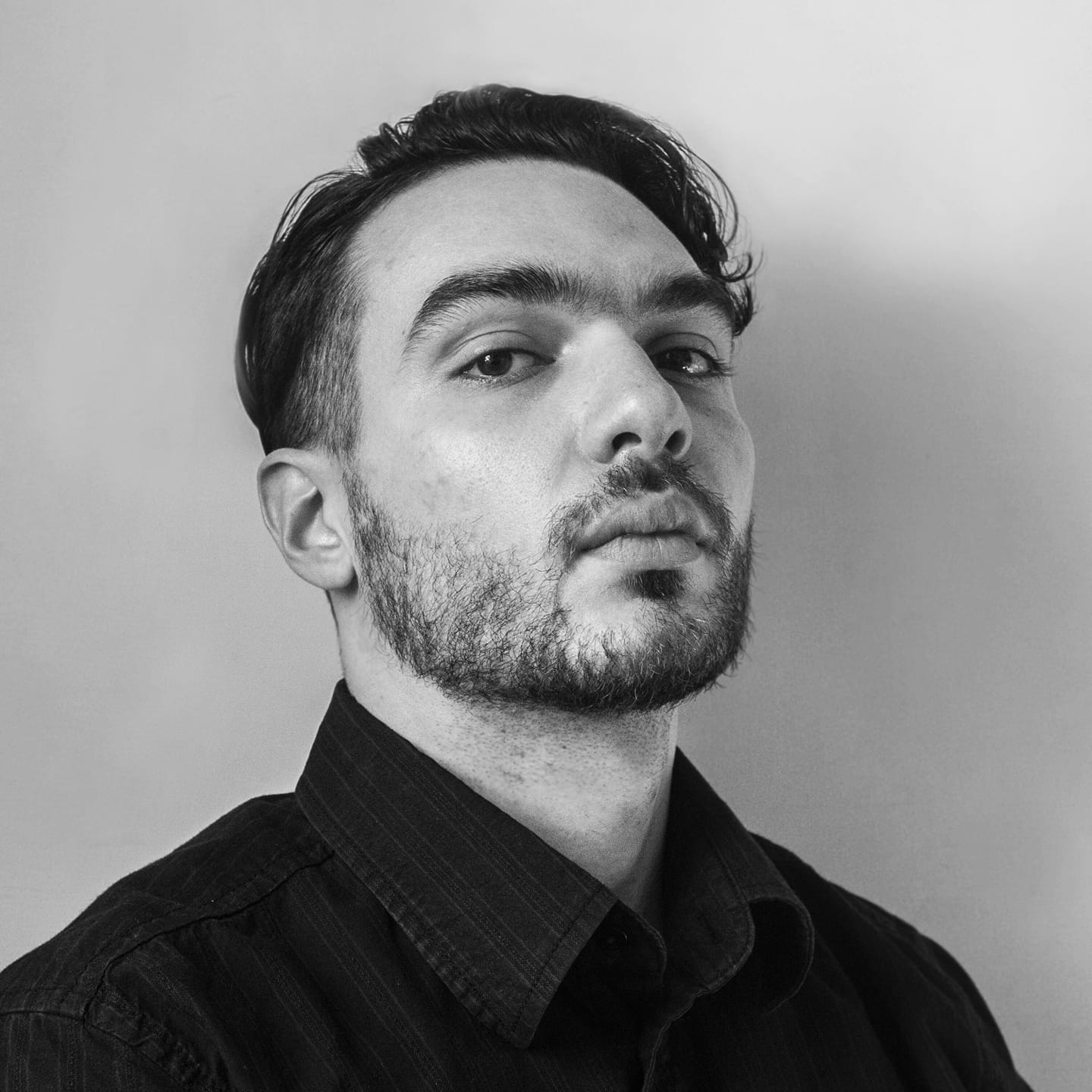
In our new interview, the Kalamata Photography Association welcomes Andreas Manolakakis, an artist who creatively moves between painting, photography, and a cinematic perspective. With deep roots in a family artistic tradition and a strong focus on observation, Andreas Manolakakis approaches each medium as a different way of recording reality — from light and landscape to memory and emotion.
He talks about the role of technology, his relationship with nocturnal creation and music, the future of art in Messinia, and the importance of artistic education for the youth. The interview captures a creator who perceives the image as a living, evolving field and insists on the uniqueness of handmade expression in an era of digital overinformation.
Interview Natasa Stamatopoulou / Translation Julia Vrioni
1) How decisive was the influence of your father and the family artistic tradition in shaping your own artistic identity?
From my very first memories, I have images of colours, brushes, and canvases. Our family home always had a dedicated space in the form of a studio. As time went on, I understood the weight of my decision to pursue the visual arts. It was a very natural decision despite the various dilemmas and advice that urged me not to rely professionally on the arts. Visually, I can trace a particular fondness for landscape even in my paternal grandparents, which I subconsciously reproduce with a nature-loving disposition. Optically and aesthetically, each generation within the family has developed an autonomous, unique language which nonetheless converses with the same or corresponding subject matter. As our experiences and eras shape us, it would be contrived to remain anchored to the past. Just as my father differentiates himself from his own father, I too am developing my own brushwork and technique. Even my sister, who is currently studying at the Athens School of Fine Arts, has her own language of expression, despite us being closer in age.
2) How do you incorporate painting and photography within your creative process? Do you feel they complement each other?
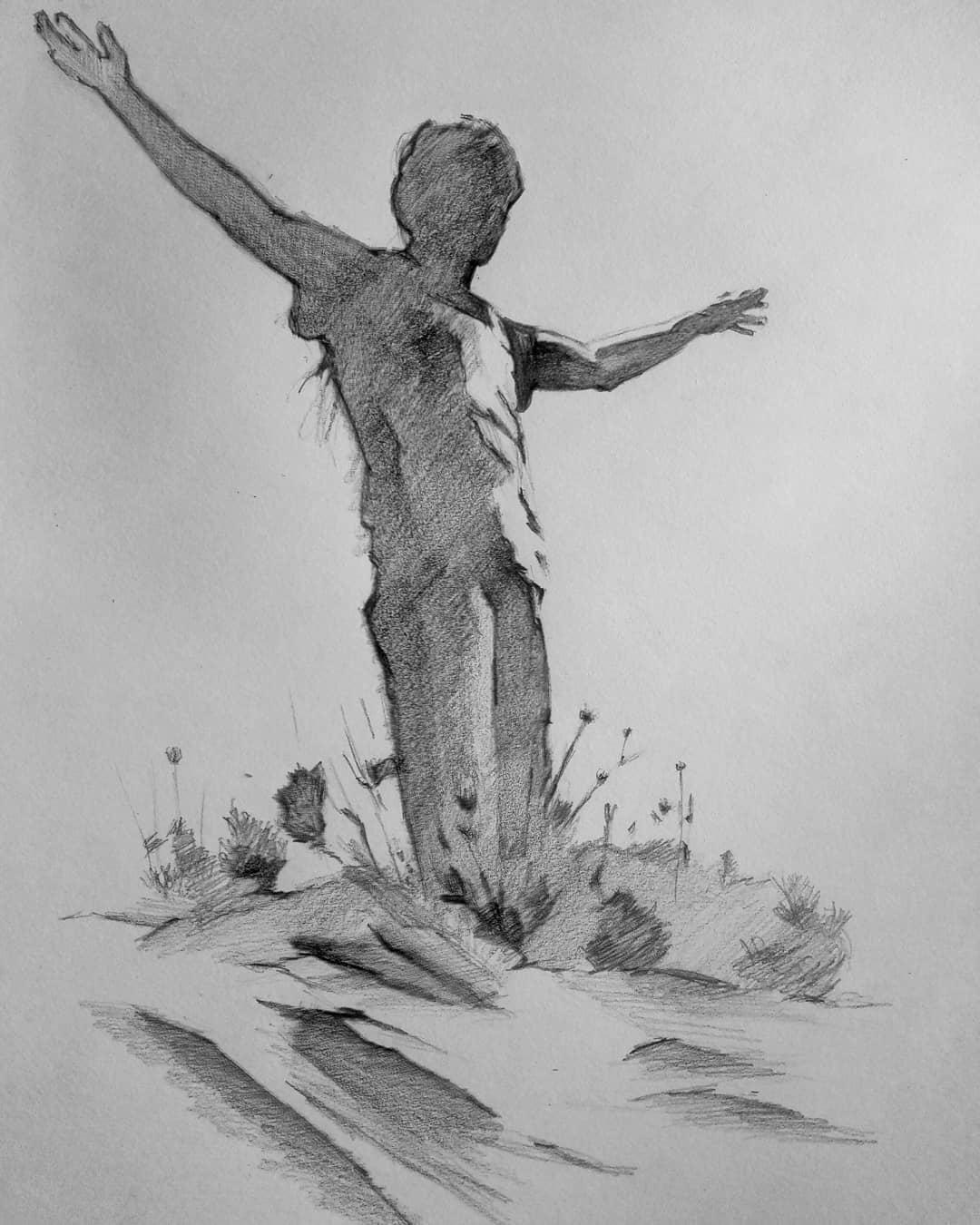
For me, photography constitutes yet another preliminary sketch, as if I am creating sketches in a notebook for details in completed works. I use photography and various scribbles with pencil or watercolour hybridly to study the proportions, the colour palette, the light, and the atmosphere I want to render in the final piece. There will always be a degree of deviation during the creative process, which is desired. The preparation, however, is what will bring about a flawless result with immediate handling so as to achieve a fresh and unforced outcome. Photography and painting complement each other during the preparatory stage. I create and collect many immediate and autonomous works or details to combine them into a final composition.
3) To what extent do you use photography as a tool within the painting process? Does it function as an aid, as inspiration, or as an autonomous creative act?
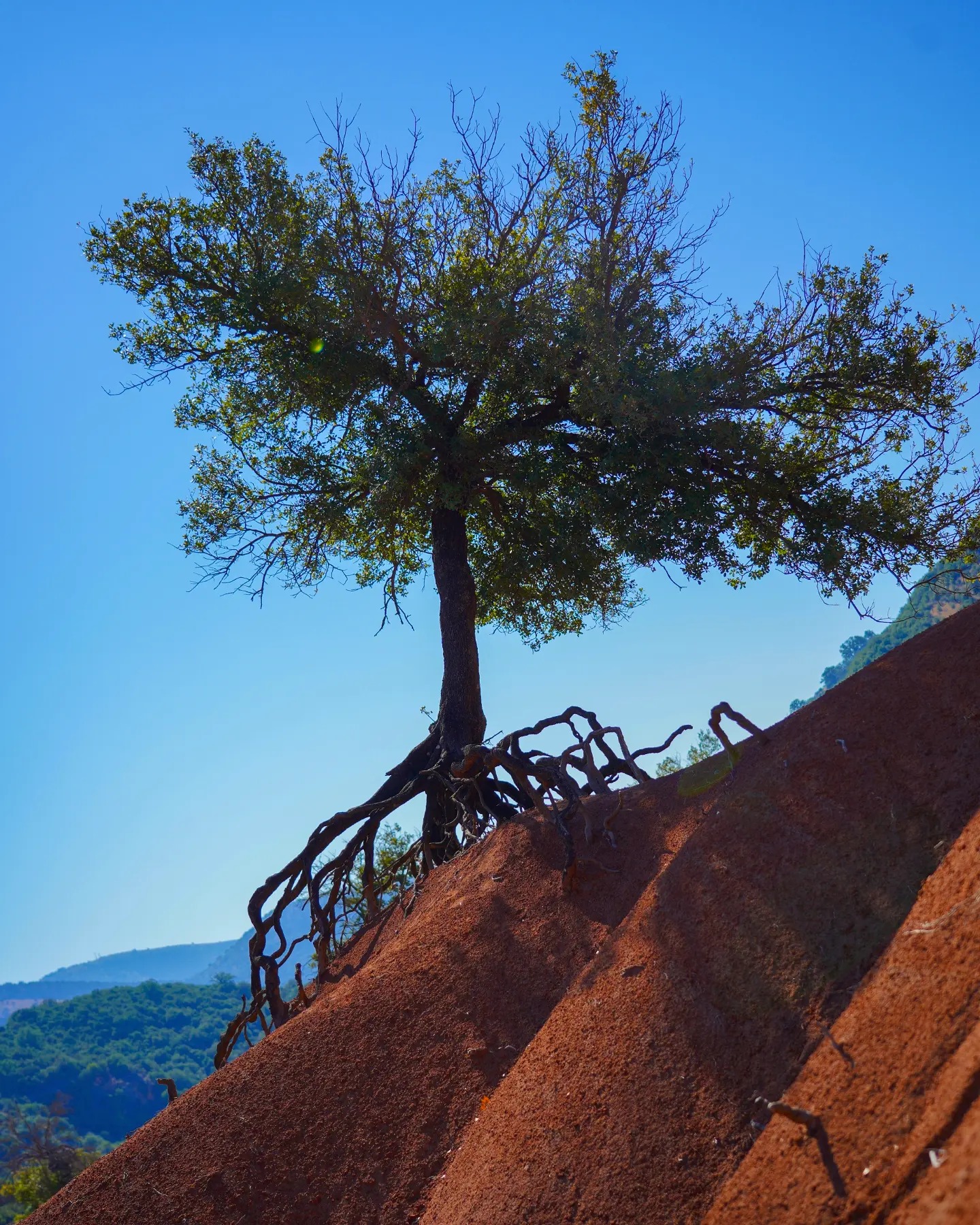
Personally, photography functions in all three fields. Depending on the subject that inspires me and the energy it emits to me, I choose how I will organize my recording media and to what extent and in which field I will focus. There are subjects that are purely photographic and there is no desire to depict them pictorially because I believe I would weaken them or "crumple" them, so in that specific case, photography functions autonomously. Similarly, there are subjects that I do not approach photographically at all because I feel I cannot exploit photography to record something that needs to be rendered more subjectively, or it will be conceptually limited by using photography as a medium. However, I do use images I have collected as inspiration and reference. There are stimuli that I do not record at all and simply perceive them as a simple receiver, sometimes transcending the visual stimulus, allowing the emotional and spiritual part to function reflexively. All these elements work collectively so that I can recall visual details, either in proportions or in colour balances, but mainly they function associatively as a non-verbal diary that refers me back to moments in time, geographical locations, and emotions.
4) How do you manage the issue of light when you photograph, in relation to the way you handle it in painting? Are there commonalities or differences?
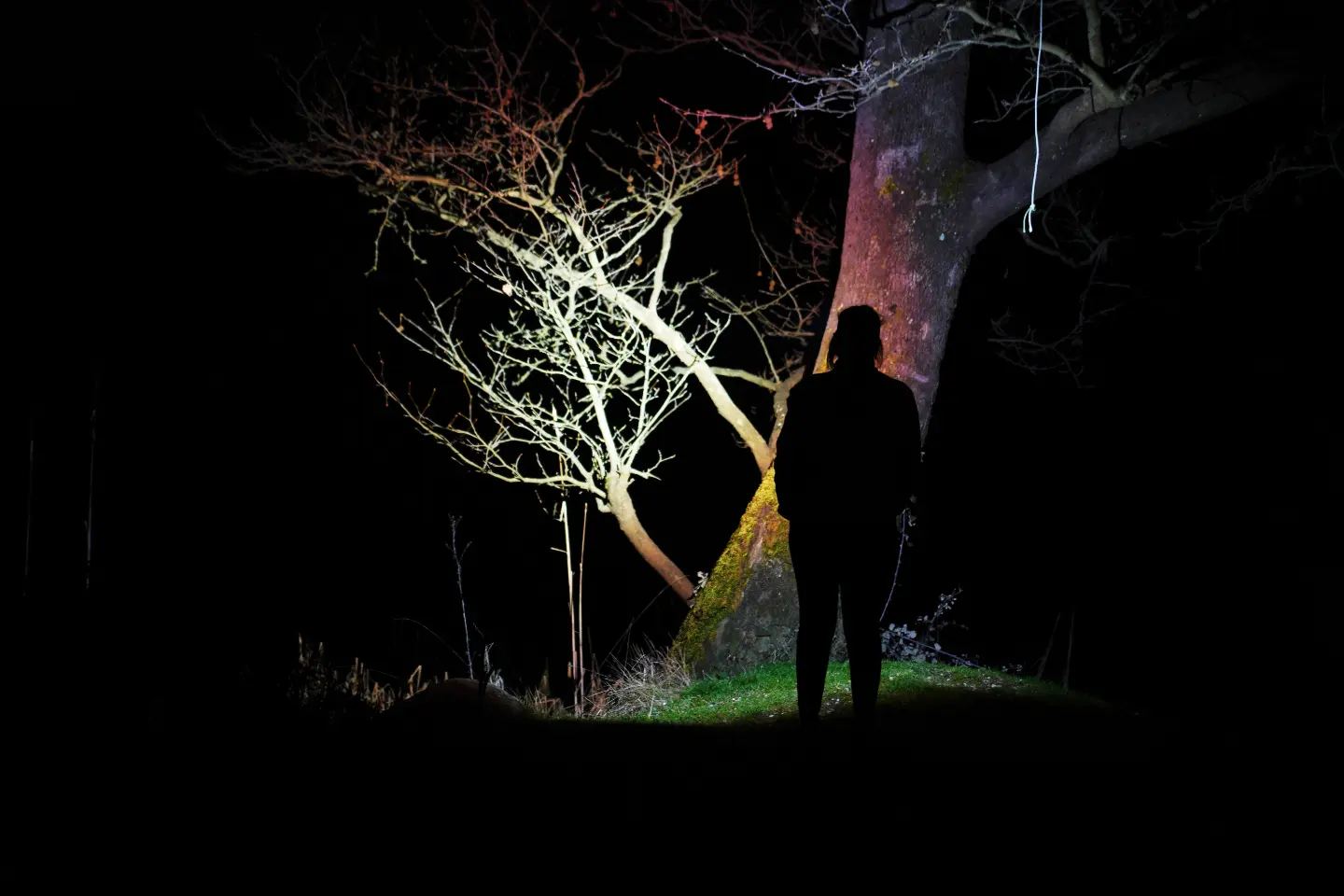
Due to my expressionistic rendering in painting, it is completely transformed. I try to translate what I perceive visually in a purely personal, emotional way. A landscape might generate tension, serenity, or awe within us. A face can emit colours and shapes. Photography gives me the comfort of time to digest every element and delve deeper into every detail that helps me understand more extensively the behaviour of light under different conditions, circumstances, and surfaces. It allows me to study something transient or fleeting again and again.
5) You often choose to create at night and with music. What kind of music helps you get into the creative process and why?
Every technique has its own soundtrack in my mind. The night hours are usually framed by orchestral sounds, classical music, jazz, and funk. Within the din of the day and the fast pace of everyday life, I prefer rock music, in a spectrum from post-rock, classic rock, to hard rock and death metal. Painting becomes like meditation and searching. Thus, I also search for new sounds, but quite often I return to my own constant values. Indicatively, some of the composers, bands, and artists that captivate me are: Holst, Shostakovich, Led Zeppelin, Madrugada, David Bowie, Nine Inch Nails, Death.
6) There is an intense variety in your engagement with the image—painting, photography, cinematographic gaze. How do these connect with each other, and what does each one offer you?
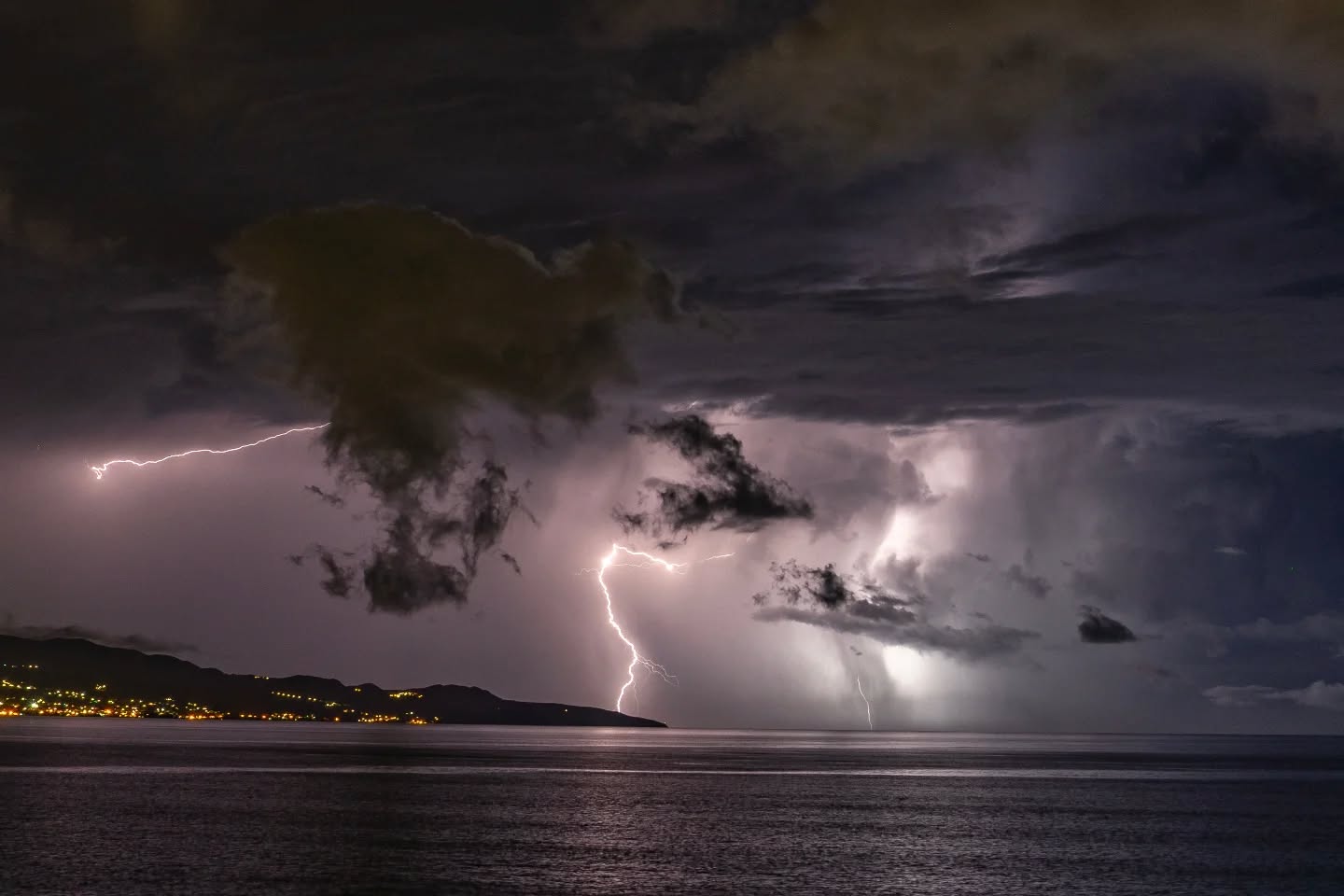
The only thing that changes is simply the medium. Primarily and regardless of the technical medium, my capacity is that of an observer. In my attempt to capture as many images as possible, I use different forms of recording depending on the comfort of the time I have available in the first phase to record a phenomenon, and depending on my personal free time. Photography and video recording have the ability to freeze time and record something instantaneous, while in painting, only our photographic and fleeting memory can capture a temporary phenomenon, such as something moving or an abrupt natural phenomenon like a lightning strike, let's say. Painting, also due to its process, has a rendition on temporal levels, while conversely, objective recording media have the instantaneous capture.
7) How does technology (digital tools, NFTs, AI art, etc.) affect your own art? Do you see it as a tool or a threat?
Technology in all its forms can function as a tool and a facilitation, but it can also be destructive at the same time. It helps us technically to have cleaner and sharper results in photographic capture more immediately and easily. However, the more automated the process becomes, the greater the chances that we may not have knowledge of the settings or even lose control of the outcome. Regarding artificial intelligence, it can offer us immediate solutions to time-consuming processes, such as corrections, for example, so that we can increase the production rate. In a creative context and without measure, it can directly affect our primary and original idea, losing our authenticity and identification with the work. It is an easy solution and can bring about a silencing of the artistic gaze and search. Painting has the particularity of uniqueness both in terms of the result and in terms of technique, dimension, and process. Conversely, a purely invented and digitally dependent result reduces the percentage of error, freedom, and spontaneity to a minimum, thus rendering the outcome limited and sterilized. Artificial intelligence can be an inspiration or guidance, but it entails the risk of influencing us and causing us to process foreign, manufactured instincts like chewed food rather than our own innate ones.
8) Do you believe that the evolution of the digital image has changed the way people perceive traditional painting?
Absolutely, it's something inevitable, without necessarily being negative. The digital image has created a completely democratic community of information and an inexhaustible volume of creation, which is also its negative element. While we have direct contact with artists and infinite images and can create an unlimited volume of works, the quantity becomes disproportionate to the quality. Every drawing or work painted on canvas has objective value, due both to the materials of its construction and creation, just as a photographic film is limited to multiples of a dozen frames. Every original work will be unique with a unique rendition, just as every negative film contains a study of the technical settings of the camera, the light, and the space. For this reason, we see thousands of digital photos that may be useless, and conversely, rolls of film where all or at least the majority of the photos may be technically and synthetically correct. Traditional painting today, I believe, must confront the digital image by highlighting its uniqueness as a creative medium. There is no restriction on light, colour, design, or freedom of rendition. It is the creation of a completely autonomous world, a dimension that is not subject to rules.
9) In your teaching in secondary education, what do you consider most important to convey to young people: technical knowledge or an artistic attitude towards life?
Technical knowledge is a fundamental element at every level and stage of learning. Unfortunately, with a few exceptions such as technical, art, and music schools, the education system does not integrate artistic or general technical skills into the apprenticeship programme. Personally, the thirst for learning and the curiosity about how things around us are created and function, stemming from the capacity of observer as I mentioned earlier, forced me to acquire the necessary technical tools which sometimes, through sheer persistence, we acquire empirically and self-taught. The need to have economically viable large-sized canvases forced me to deal with the woodworking part and the technical part of constructing a canvas stretcher frame. The artistic attitude depends directly on the perception of each individual. The education system levels subjective perception and criticizes technical ability. It is a purely theoretical process with the main goal of ranking students with objective criteria in nationwide exams. It does not shape characters or critical opinion and perception of our environment and society. It leaves no framework for creative or spiritual expression. So, I believe that the main task of an artist in education is the implantation of a wide variety of sensory resources in the younger population with the aim of shaping unique characters with empathy and sensitivity, but without fragility. A search should be promoted, away from the material and practical part of everyday life, regarding the spiritual and subjective perception of the world by each different person.
10) How do you imagine the future of art in Messinia? Are there the conditions for a contemporary visual culture to flourish in the region? What could be done to enhance it?
Messinia constitutes an idyllic location for creation and inspiration due to the unique richness and beauty of its location. In practice, however, socially it is a very closed community with views deeply rooted in anachronistic structures. Sensitivity is considered a weakness, involvement with the arts a waste of time and a side occupation (hobby) rather than personal expression and an outlet. I hope that gradually the situation will begin to improve and a more democratic artistic framework will be created with greater activity and polyphony, especially in the visual arts where, due to the individuality that creation requires, there is a lack of teamwork and a lack of artist collectives. The gaze nationwide falls on Messinia as an ideal resort with excellent production in the primary sector, which is topographically true. It is in the hands of the agencies and the Municipalities to promote the arts and artistic education and awareness with workshops, exhibitions, screenings, and symposiums, as was done in the past. Specifically for our Municipality, the existence of so many untapped spaces for such a long time indicates understaffing and a lack of focus, as the visual arts events of the city are numerically limited to the fingers of one hand. The degradation and marginalization of the visual arts spaces do not have a great impact on tourist attendance, while culturally it could very well constitute a destination in terms of visual arts. Especially when we see international meetings in numerous sectors (International Dance Festival, International Documentary Festival, International Music Days, International Summer School of Theatre Kalamata, International Puppet Theater Festival Kalamata) except for the visual arts sector, this highlights a more general attitude.
11) Finally, we would like you to tell us if you single out any contemporary painters for their work.
In a society which prioritizes material wealth and devalues the arts, painters, regardless of their work, are personally a great resistance to these changes, constantly inventing newer and more modern renditions of their environment. With obsolete materials that have been recycled in the visual arts for centuries, they comment on and depict reality, but also constantly create new worlds and other dimensions. I could not fail to mention artists I have in my immediate circle, and first and foremost my father. In a Greek reality with tremendous ups and downs, with daily work and a large family on his shoulders, he manages to steal time to create. Based on personal experiences and stimuli, mainly of the Messinian landscape, he constantly formulates a different way, even with the same themes, to let the narrative rest in his dance-like brushstroke. Another shining example of Kalamata's painting disposition is Dimitris Tzamouranis. Also the offspring of a family with a painting tradition and artistic sensitivity, he shapes the world of painting at a European level. With academic values and years of passionate painting career, he is a bright example of the sensitivity and evaluation that we locally have as a society.
Among foreign painters, I am fascinated by Peter Doig and Wilhelm Sasnal. Both manage reality and everyday life visually in a completely different way, with a purely personal translation of the world into their own data. Always with a representational but purely expressionistic disposition, through intense chromatic relationships, autonomous brushstrokes, and dynamic contrasts.