
HPS - Photography as a Cultural Legacy and Living Dialogue
Photography is not merely a means of documenting reality; it is a lively way of expressing, interpreting, and preserving our cultural identity.
In Greece, the Hellenic Photographic Society (HPS) has been at the core of this artistic journey for 73 years, contributing significantly to the cultivation and promotion of photographic art.
As the country's oldest photographic association, it has stood by generations of photographers, uniting older and younger creators in a continuous dialogue.
In this interview, we present the HPS, which is participating with its own exhibition in the 1st Kalamata International Photography Gathering, shedding light on how the HPS safeguards photographic cultural heritage, faces the technological challenges of our time, and charts its future through the vision of its President.
It's an essential look at an institution with stable roots and dynamic evolution.
1. How does the HPS contribute to the preservation and promotion of Greece's photographic cultural heritage, and what role do its members play in this process?
The HPS is the oldest artistic photography association in our country.
It was founded by a group of our most significant photographers, who had set this exact goal for themselves.
The purpose of the HPS's founding, as stated in its charter, was and remains the development of artistic photography by any suitable means, the technical training of photographers, and the promotion of Greek culture through photography.
In its 73 years of existence, the HPS has contributed significantly to the promotion of Greece's photographic cultural heritage through its exhibitions, activities in our country, notable photographers, and branches in many cities.
As a member of FIAP (Fédération Internationale de l’Art Photographique), it has also promoted Greek culture internationally by participating in international exhibitions and Biennales. All of these contributions have been made possible by the work of its members, which the HPS works to promote by all means, both in Greece and abroad.
2. How does the HPS encourage creative dialogue between new and older photographers, and how does this affect the evolution of photographic art in Greece?
Creative dialogue between old and new photographers is a long-standing tradition of the HPS.
In their joint activities, older members always had a mentoring and educational role with the newer members. There has always been an interaction between old and new photographers through seminars, presentations, and lectures.
Additionally, for at least three decades (from 1960 to 1990), the HPS, with its magazine “Greek Photography,” shaped the entire photographic community throughout the country. The articles and publications in the magazine by older photographers were practically the only educational tool of the time.
But new photographers with innovative ideas, who found fertile ground at the HPS, also contributed significantly to the evolution of photographic art in our country.
3. How have digital technology and smartphones affected the art of photography?
It is obvious that digital technology and smartphones have revolutionized the art of photography, deeply affecting every aspect—from shooting to editing and using photos. Their impact is not only technical but also aesthetic, social, and cultural. This is a major milestone in photography, similar to what happened in 1884 when George Eastman introduced the KODAK box camera and flexible film, which first brought photography to the general public.
We could say that digital technology and smartphones have brought a “democratization” to the field of photography, as everyone now has access to a camera—their smartphone. In this way, photography has stopped being an "art for the few" and has become a means of expression for the many.
Photography also found a new space for action through social networks (Instagram, TikTok, Facebook), creating a new image culture in real time.
Even many professional photographers use smartphones for street photography, vlogging, or even advertising campaigns. Ultimately, I think that digital technology and smartphones have redefined the use of photography, turning it into an everyday language of communication, as well as a new field of artistic creation.
4. What is the significance of artificial intelligence (AI) in contemporary photographic creation?
It is obvious that artificial intelligence (AI) has acquired a decisive significance in contemporary photographic creation. It affects the way photos are taken, as well as their processing and artistic use.
During shooting, we see this with the automations and optimizations already present in cameras and smartphones, such as smart scene recognition, face and eye detection, and image stabilization.
In post-processing, AI is already available in programs like Lightroom and Photoshop for automatic image processing, facial retouching, and background removal or replacement.
With AI, we can even create photos without a camera. AI has also begun to intervene in artistic expression and new forms of creation by getting involved in stylistic transformations and image composition.
It is clear that artificial intelligence is transforming photography from a technical art into a hybrid of creativity and technology. It does not replace the photographer but gives them new tools of expression, improving both the process and the final result.
5. What are the main reasons a photographer would choose to edit their photos with software like Lightroom or Photoshop?
I think choosing an editing program is the only way to go.
A photo is not finished with the shot, no matter how perfect it is.
We should remember that most people today use Raw files when shooting, in which tonal and color contrasts are neutral. The photographer must then use an editing program to give the necessary values for their work.
The photographer's work does not stop at the shot. The use of digital photography can only yield excellent results with a good editing program.
I believe that a modern photographer must be an excellent user of Lightroom to be able to manage their photos after the shot in terms of organization, processing, and use. However, the perfect result is also achieved with the use of Photoshop for special processing, which can perfect the photo.
After all, these two Adobe programs complement each other.
6. What is your personal goal as president of the HPS for the coming years?
For the next few years, my goal is to further promote the work of our members, among whom there are many important photographers who have had significant successes abroad, and we want to promote their work domestically as well. Also, through HPS Publications, we have started publishing photo albums from our archive to make their work known to the photographic community.
Finally, we have already started planning for the celebration of the 75th anniversary of the founding of the HPS in 2027.
The goal is to inform the photographic community, especially young photographers, about the HPS's journey and contributions to the Greek photographic scene and its potential for future development.
7.You also participating as an association in the 1st International Photography Gathering of Kalamata. How do you find this initiative?
The HPS has many years of experience in participating in international photographic activities in our country and abroad, and it has organized and continues to organize its own, through FIAP and its exhibition center, the ATHENS FIAP EXHIBITION CENTER. However, we have a long-standing collaboration with Kalamata and its photographic community.
It is a pleasure and an honor for the HPS and its members to participate in its 1st International Photography Meeting.
Initiatives like this are important for the promotion of photography, and the HPS's support for them is a given.
We wish it success and hope it becomes an institution.
Two
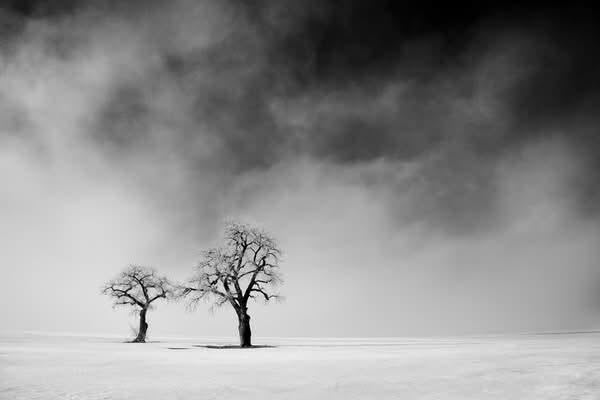
Our monthly theme for friends of our Facebook group.
Grab your camera or phone, explore this month's theme and share your own shot with the group.
Newsletter
Contact
-
Address:
Building No. 9, Eastern Center, Kalamata
(opposite ERT Kalamata) -
Phone:
+30 6974 655 551 -
Email:
photokalamatas@gmail.com - Website: www.fokal.gr
Social Media
-
Facebook Page:
Kalamata Photography Association – F.O.KAL. -
Facebook Group:
Friends of the Kalamata Photography Association – F.O.KAL. -
Instagram:
@fokal_kalamatas