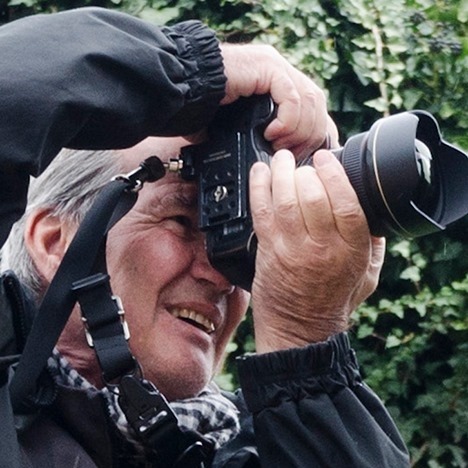
"Time in Images: Photography as an Archive of Life and History"
His words serve as a reminder that, despite technological progress, the essence of photography remains unchanged: to see, to feel, and to tell a story.
In a world saturated with images, where the gaze often loses its meaning amid the noise of the digital crowd, the eye of a photographer—with nearly six decades of experience—carries a unique weight.
His journey begins with family cameras, continues through the darkrooms of newspapers, and culminates in the small villages of the Mediterranean, where light transforms time and silence becomes an image.
The interview that follows is not merely a record of experiences. It is a deep dive into the fundamental role of photography as both personal and collective memory, as a medium with historical responsibility, as an act of observation rooted in substance and truth.
It explores how we see, what we choose to preserve, and how we can turn a simple "click" into testimony, into art, into human connection.
A narrative that traverses time and space—from Northern Europe to the heart of Mani, from the archives of publishing houses to the narrow alleyways of a changing village—inviting us to look again, with fresh eyes, at the world around us.
(Interview by Natasa Stamatopoulou)
What first inspired you to take up photography, and how has your relationship with the medium evolved over your 50-year career?
Both my parents were keen amateur photographers so there were always cameras lying around the house. I took my first ever pictures when I was about 13 on an old Kodak box camera. Later, when I was about to leave school, I knew I wanted to do something creative and I became more interested in the medium.
My elder brother was already making a living as a photographer and he taught me most of the basics.
I manage to get a few pictures published and with that experience I got a job with a local newspaper. After 2 years learning darkroom techniques, photographing local news and making tea for the other photographers, I decided it was time to go my own way. I took a ferry to Spain and lived in a little fishing village for six months. And that’s when I realized I wanted to be a travel photographer.
As for my relationship with photography over 57 years actually, it’s never been easy to earn a living and I’ve had to do many different types of photography to survive. Perhaps that is a good thing, it’s given me a wide variety of experience which is useful in any genre of photography. Also, the publishing industry has changed dramatically in those 50 years driven by the growth of digital technology.
When I started, I had to physically take my pictures to the magazines and newspapers in London to sell them. It was never easy to deal with a busy, hard-nosed editor.
Now, I work mainly through an online agent and my pictures reach a much wider market, selling all over the world. This has also enabled me to pursue more personal projects and still find outlets for them.
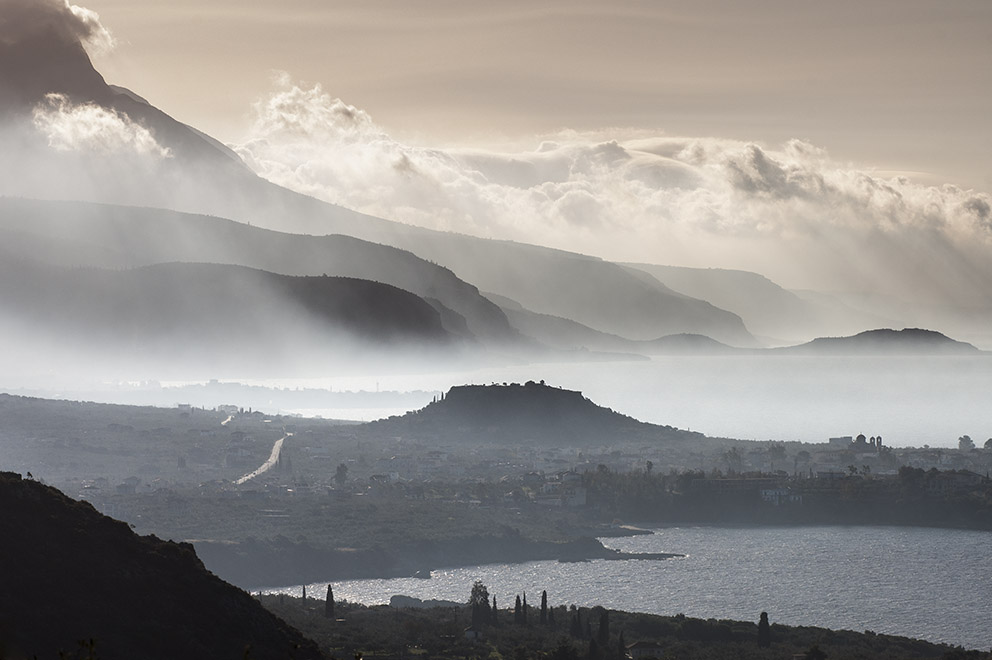
What led to your decision to settle permanently in Mani, and what inspires you
most about the region as both a photographer and a person?
We had travelled in Greece in the 1980’s and first came to the Mani in 1989,
immediately falling for its charm and the dramatic scenery. Later, in the early
2000’s we bought a ruin in Proastio restored it and moved here permanently.
Which elements of Mani do you find most visually and emotionally powerful? How do you capture the uniqueness of the landscape and its people through your lens?
I’m still fascinated by the landscape here. It’s constantly changing with different light and seasons. But people and human nature have always been interesting to me right from the beginning of my career. So, even though village populations have declined over the years, I still enjoy seeking out the few remaining locals. I am just as happy photographing village life as I am street shooting in Athens or Thessaloniki.
How did moving from Northern Europe to the Mediterranean affect your photographic perspective—culturally, in terms of light, and daily life?
The biggest technical difference is the amount of light. Whereas in the North of Europe I would usually be shooting at iso 400/800 at F4 or even 2,8. under a very cloudy sky. Here in southern Europe its iso 64 or 100 at F8 to 11 in brilliant sunshine most of the time.
How has your photographic approach changed over the years? Are there any
techniques (e.g. black and white photography, natural light) that have remained
constant in your work?
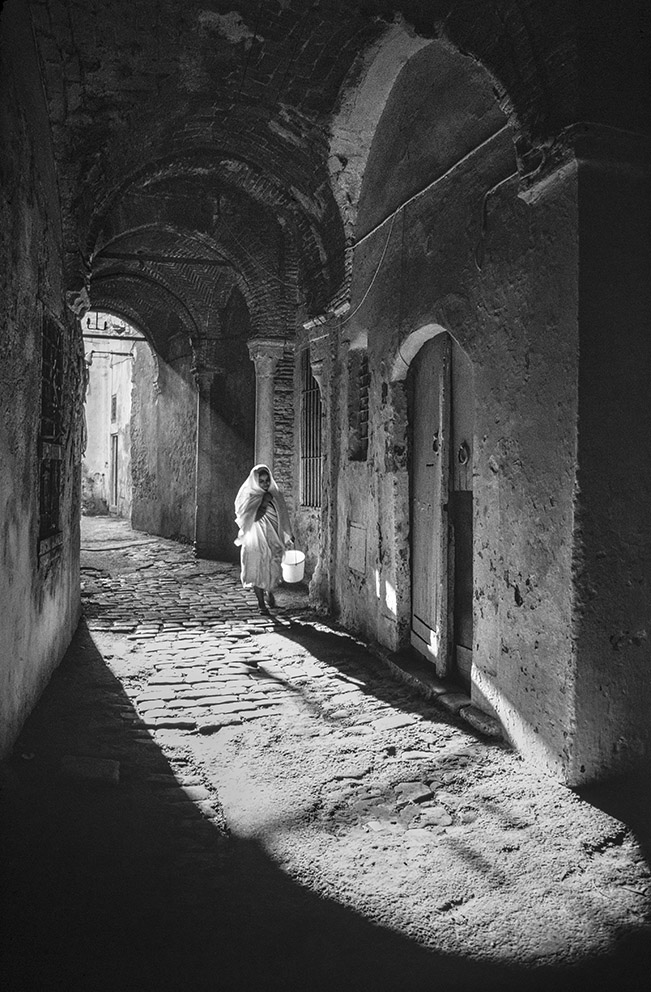
When I started 57 years ago, very few magazines or newspapers were publishing color photography. It was still too technically difficult and expensive except for prestige publications like Life magazine and Vogue. So, the norm was black and white. It wasn’t until the 1980’s that there was a technical revolution in printing and suddenly everybody wanted color. But I still shoot in black and white for some of my personal work for exhibitions etc. I have always used available light; I like to keep the lighting as natural as possible.
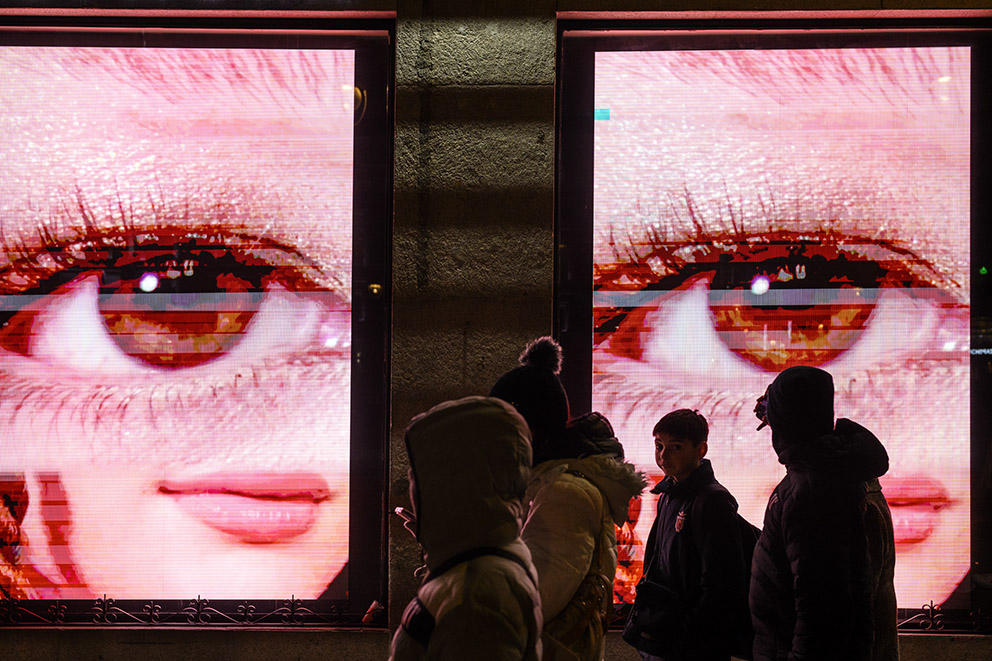
How do you decide whether a photograph should be in black and white or in color? What guides that choice in terms of aesthetic and meaning?
It’s not an exact science! Often, if the picture is monotonal, or has very little color, it will work fine in black and white. But ultimately, it depends whether the colors in the image are important ie: do they add to the meaning or mood of the picture.
I still love black and white but I work mainly in color these days because that’s what most publisher want and also, we live in world full of color.
Many of your photographs feel like visual records or memory archives. Do you believe photography carries a social or historical responsibility?
Yes, it has huge social and historical responsibility – if you believe our knowledge of the past is important. Photography, and now Video, are virtually our only visual records of the recent past. Before photography we only had oil paintings and images scratched on the walls of caves.
The moment we take a picture it becomes a picture of the past, a historical record.
The Greece I photographed 40 years ago doesn’t exist anymore; the way of life has changed dramatically. Even the Greece I photographed five minutes ago is now history!
And yes of course, my pictures are a visual diary of my own life and travels.
In an age of image overload and constant digital content, how do you view the role of the photographer today? What remains essential for you when trying to capture the world in images?
We should be honest about the world we live in now.
When we look at the photographs by the great photographers of the past, we feel a sense of nostalgia – all those old cars, cloths, trilby hats etc. but of course they were very modern cars and cloths when Cartier Bresson for example took his pictures. So, we should be trying to record the world we live in now, not copying the past or chasing anachronisms and creating old fashioned clichés.
We should be
photographing all that colorful, ugly chaotic modernity that we live in now, it’s
going to look very interesting and very romantic to people in 50 or 100 years’
time.
Photography has changed drastically in recent years, especially with digital tools—smartphones, drones, filters, post-processing. Do you believe technical skills are enough to make a “good” photographer, or are there deeper qualities that shape a meaningful photographic vision?
Of course, it still helps to have technical competence but technical skill alone, never made a good photographer. As many great photographers have said before, “pictures are made with the head, the eye and the heart”. When I started, there was no auto exposure, no auto focus, in fact there was no auto anything so you had to have a certain degree of technical skill just to get a reasonably exposed picture. Now in 2025 the camera can do most of that for you (much of the time). However, even now in the age of auto everything, having good technical competence gives you much more creative control over the outcome of your picture.
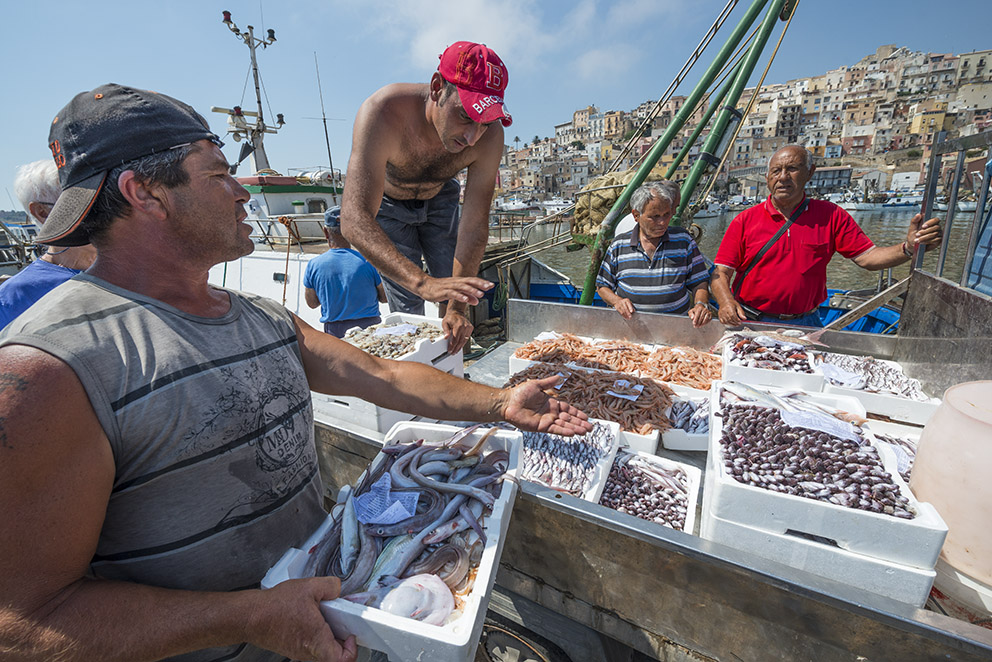
You’ve traveled extensively across Europe, North Africa, and of course Greece. How has exposure to different cultures influenced your photographic approach? What are you aiming to capture when you find yourself in a new cultural setting?
I’ve always tried to capture the uniqueness of these places the different landscapes, the architecture etc. And of course, the cultural life of the people.
You’ve been a long-standing member of the Kalamata Photography Association, offering deep knowledge and inspiration to those willing to look and listen. What are your hopes for the first International Photography Gathering of Kalamata, organized by your group?
I think I have learned as much from the group as they have learned from me; there are a lot of good photographers there and all have some new knowledge or experience to add to the pot. So, it’s been very much a two-way learning process and also a great pleasure to be part of the group.
As for the 1st International Photography Gathering of Kalamata, I know Nikos and the group have worked very hard to get this off the ground. I hope it will be a great success and that it will become a regular annual event in our Calander.
What is the most essential piece of advice you’d give to a young photographer just starting out?
Photography is a form of personal expression like any other creative medium.
Your ideas and thoughts are as valid as anybody else’s in this world.
So, Be yourself!! When you go looking for pictures try and see what moves you personally, what you find interesting, what you find beautiful or strange; not just what you think other people will like. Similarly, try not to copy other photographers just because you like their work. It will help you to avoid clichés and develop your own personal style, making your work stand out from the others.
So, do your own thing and ignore everybody else’s advice - and yes, I guess that probably includes mine!
Two
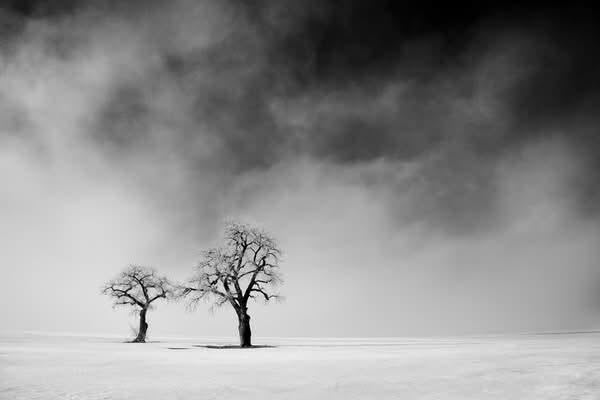
Our monthly theme for friends of our Facebook group.
Grab your camera or phone, explore this month's theme and share your own shot with the group.
Newsletter
Contact
-
Address:
Building No. 9, Eastern Center, Kalamata
(opposite ERT Kalamata) -
Phone:
+30 6974 655 551 -
Email:
photokalamatas@gmail.com - Website: www.fokal.gr
Social Media
-
Facebook Page:
Kalamata Photography Association – F.O.KAL. -
Facebook Group:
Friends of the Kalamata Photography Association – F.O.KAL. -
Instagram:
@fokal_kalamatas